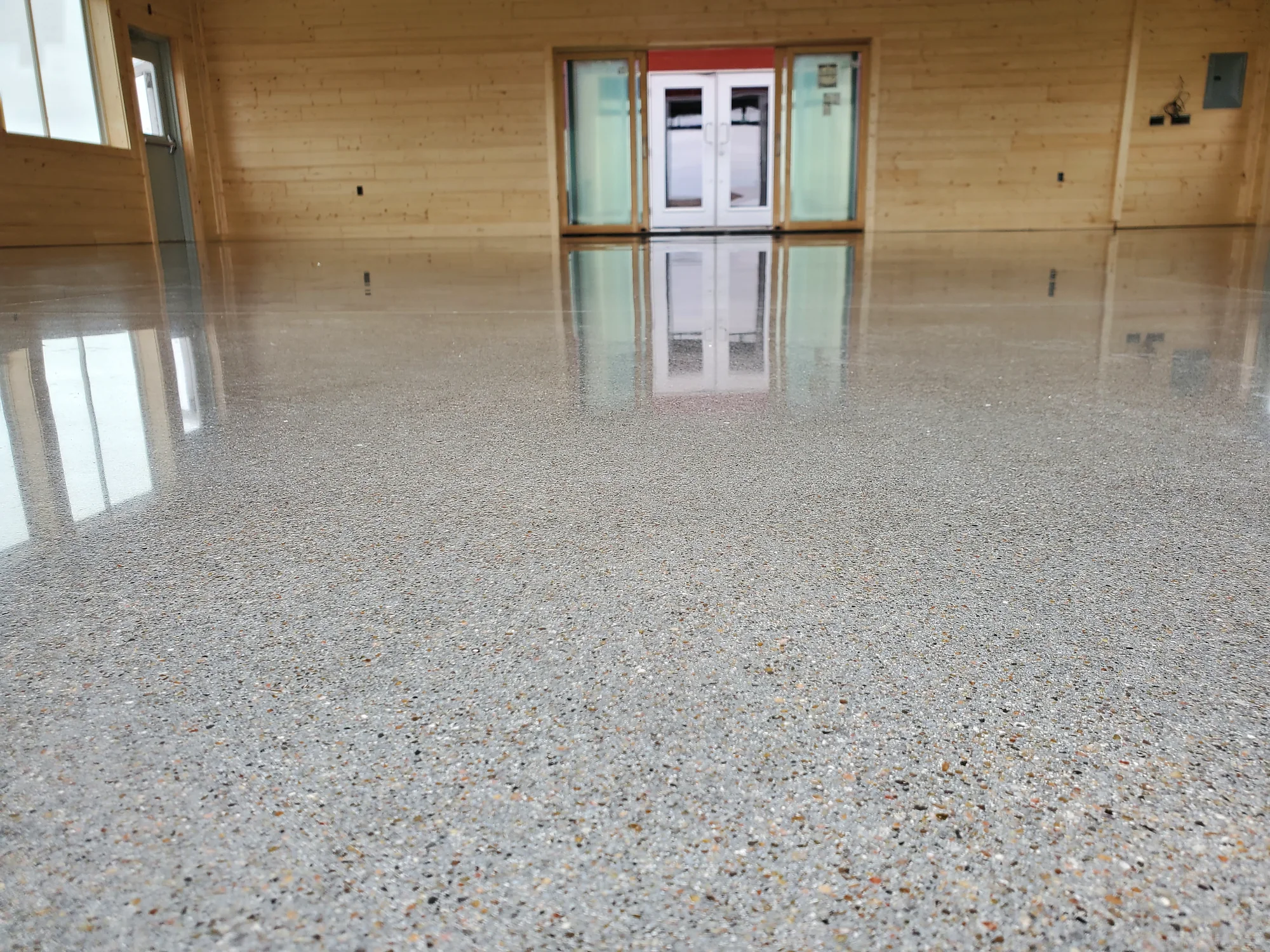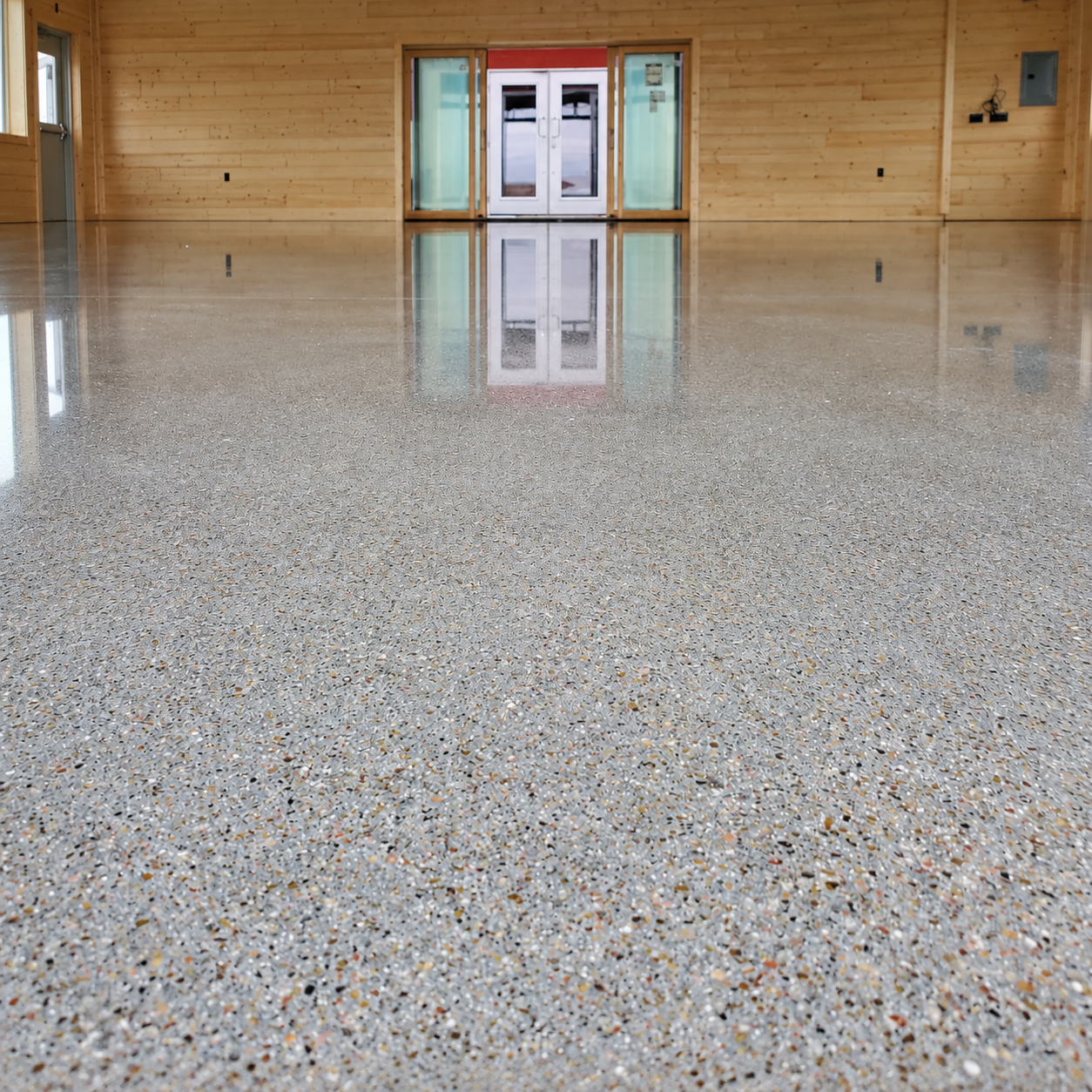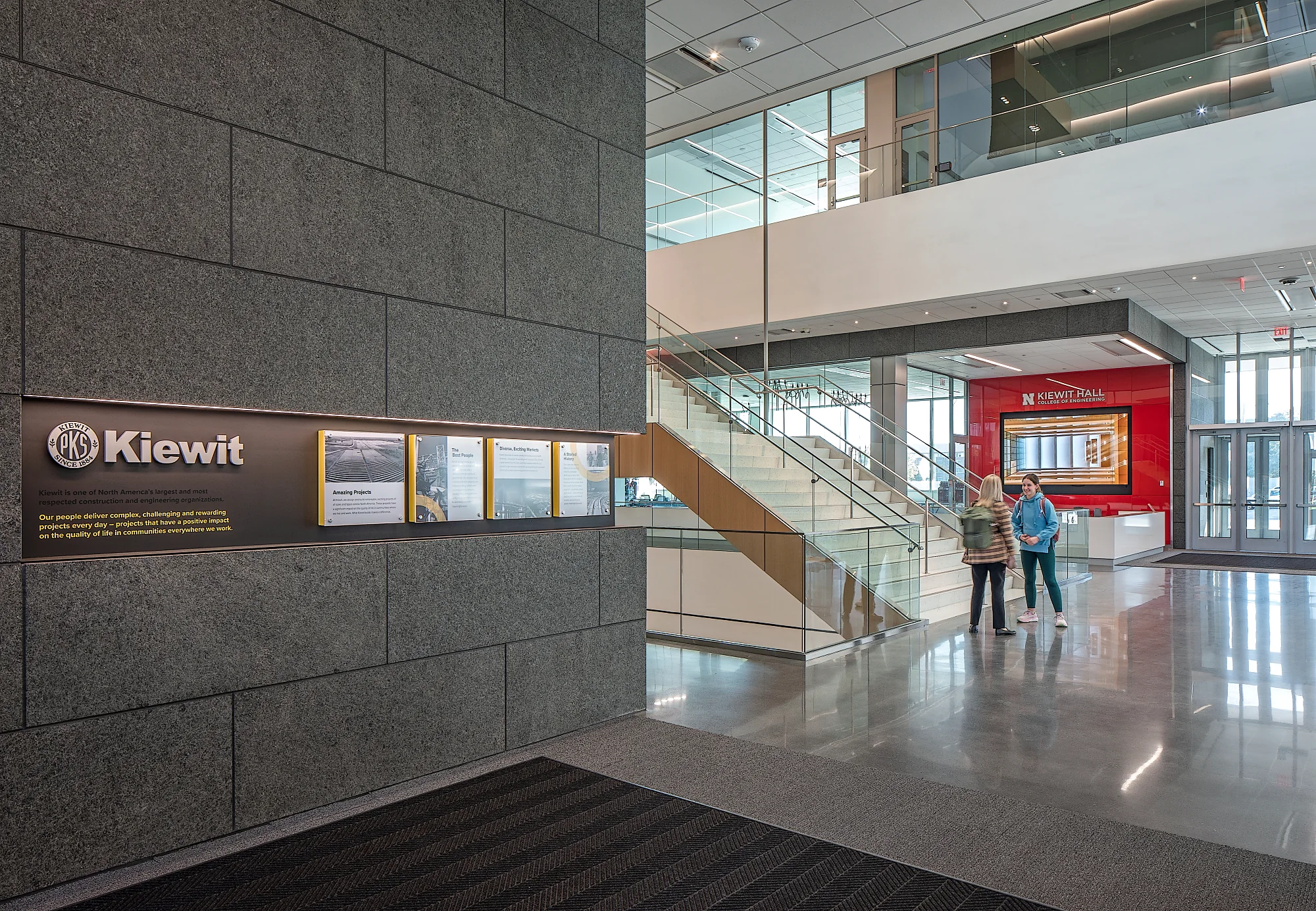
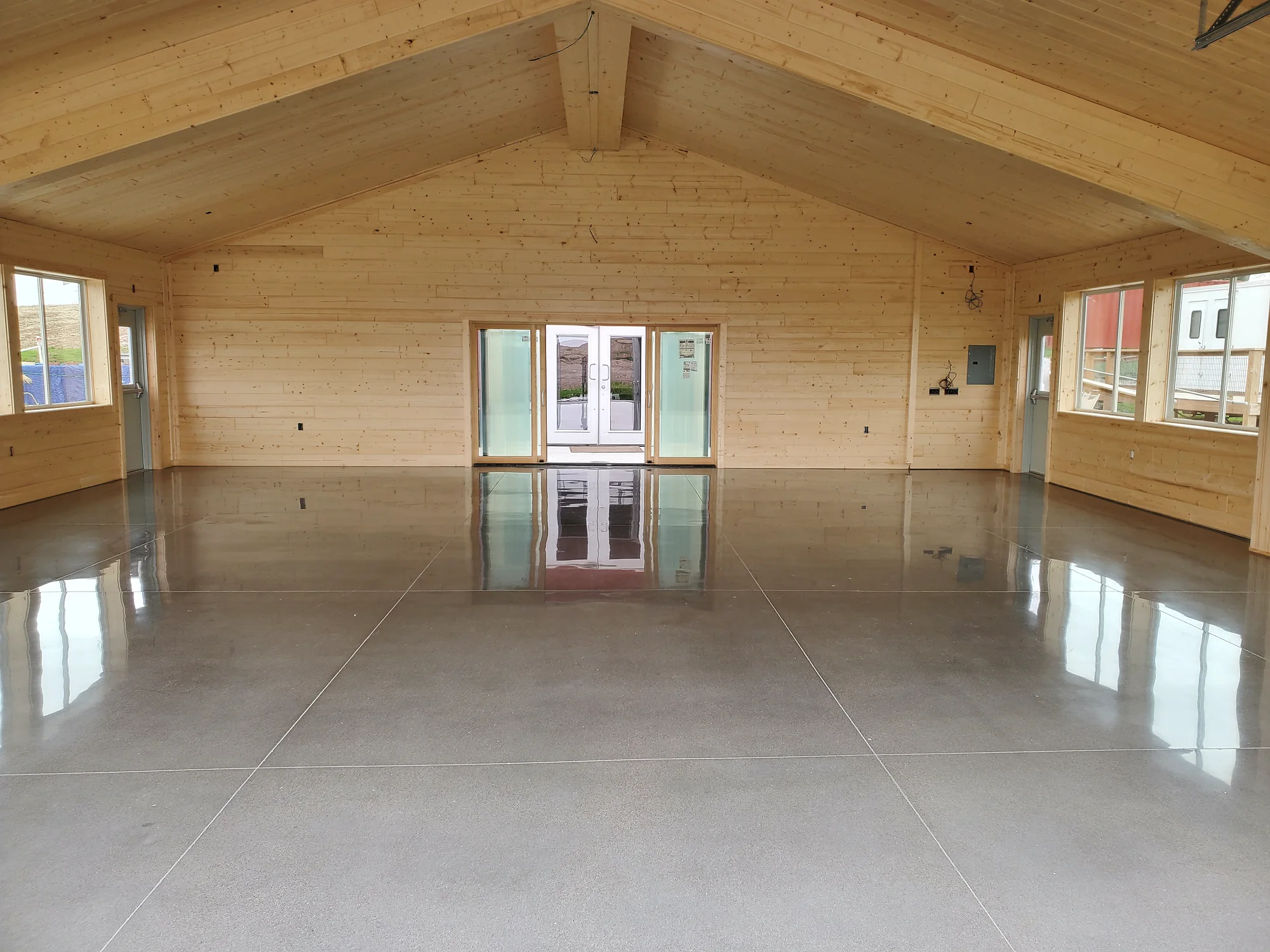
Polished concrete floor in Kiewit Hall

Solution 01 · Decision guide

Polished
concrete

You are standing on unlimited options. A series of deliberate choices about exposure, sheen, performance, variation, and the work required to reveal the slab beneath.

Begin with the material

Polishing reveals the concrete you already have.

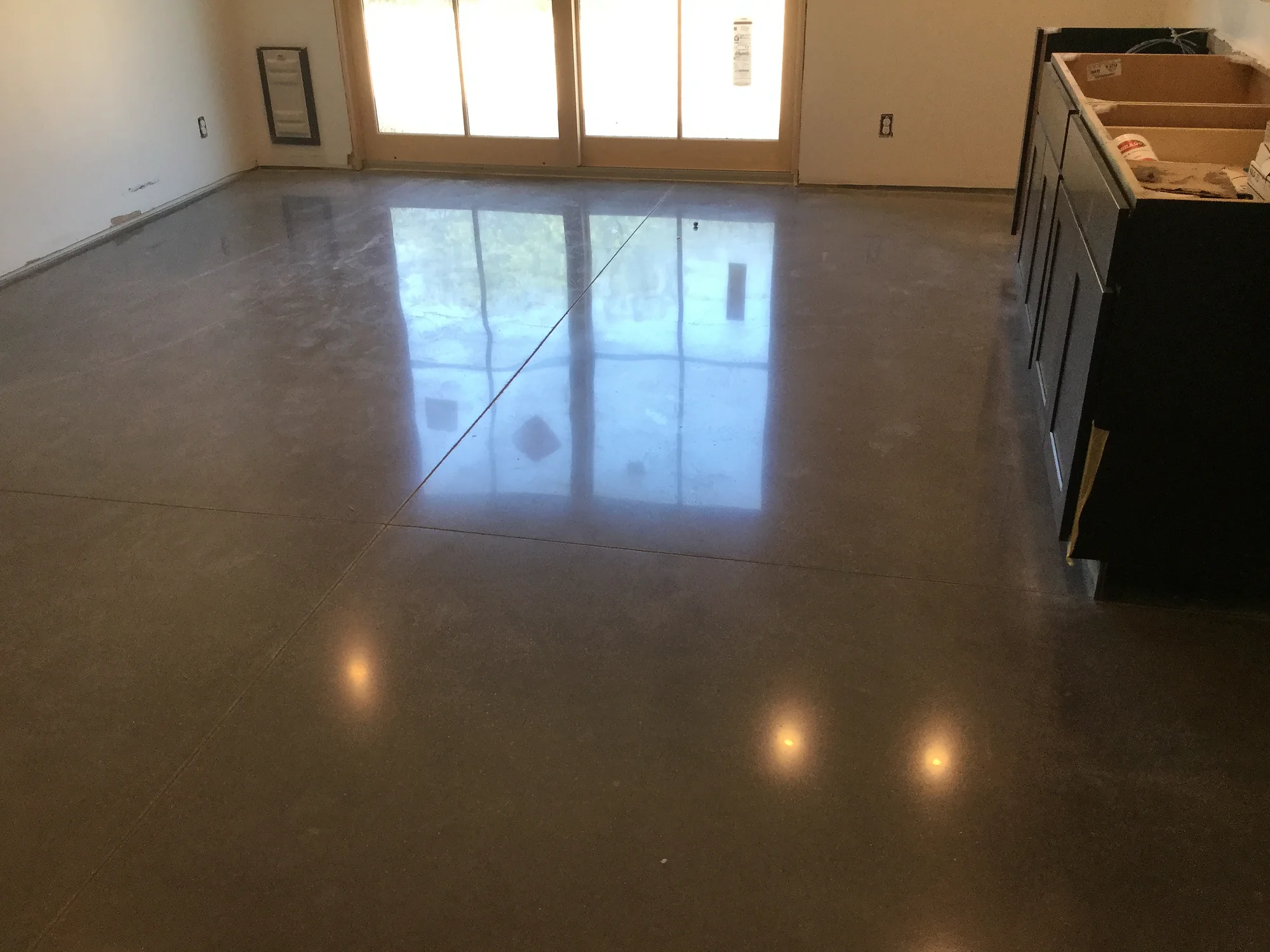
Polished concrete is a mechanically refined concrete surface—not a coating placed over the floor. Diamond tooling progressively grinds, hones, and polishes the slab. That process can improve durability, light reflectivity, and ease of maintenance while allowing the concrete itself to remain visible.

The most important early conversation is not simply “Do you want polished concrete?” It is “What do you want the floor to look like, what must it support, and what condition is the slab in today?”

Two separate choicesAggregate exposure determines what you see.Sheen determines how the surface reflects light.

Decision 01 · Aggregate exposure

How deeply should we reveal the slab?

The Concrete Polishing Council class framework gives owners, designers, and contractors a common language for the visual result. Deeper exposure usually means more grinding—and more of the slab's aggregate becomes part of the design.

Class A Cream finish polished concrete exampleClass A

Least material removal

Cream finish

CPC reference · Cement fines
A light refinement that keeps most coarse aggregate below the surface. It preserves more of the slab's original character—and makes placement and finishing history especially visible.
85–95% cement fines · 5–15% fine aggregate
Class B Salt & pepper polished concrete exampleClass B

Moderate material removal

Salt & pepper

CPC reference · Fine aggregate
A shallow cut that reveals sand and small aggregate. It creates visual texture without the deeper grinding required for a more exposed stone pattern.
85–95% fine aggregate · 5–15% blend of cement fines and coarse aggregate
Class C Medium aggregate polished concrete exampleClass C

Greater material removal

Medium aggregate

CPC reference · Coarse aggregate
A deeper cut that reveals more of the stone within the slab. The stronger pattern requires additional grinding and makes aggregate distribution part of the finished design.
80–90% coarse aggregate · 10–20% blend of cement fines and fine aggregate

Decision 02 · Sheen

How should light move across the floor?

Sheen is selected independently from aggregate exposure. A cream finish may be highly reflective, while a more exposed floor may be refined to a quieter satin appearance. Lighting, traffic, maintenance, and the desired atmosphere should guide this decision—not gloss alone.

Understanding the investment

Square footage is only the beginning.

The price follows the work. Two floors with the same area can require very different amounts of labor, tooling, repair, protection, and coordination. These are the conditions that most often change the volume of work.

01

Starting condition

Existing coatings, adhesives, contamination, weak concrete, and previous floor coverings can add removal and corrective work.

02

Exposure depth

A deeper aggregate exposure requires more grinding passes, tooling, time, and material removal.

03

Repairs

Cracks, joints, spalls, pinholes, and cutouts must be evaluated and repaired with appearance and performance in mind.

04

Edges & obstacles

Walls, columns, equipment, small rooms, stairs, and floor penetrations increase detailed handwork.

05

Access & schedule

Occupied spaces, phased work, restricted hours, protection, and mobilization all affect how the work is performed.

06

Color & protection

Dyes, stain protection, specification testing, and special appearance requirements add steps beyond the core polishing process.

Why SCS evaluates first

A useful estimate begins with the desired outcome and the actual slab—not a price-per-square-foot shortcut.

The SCS process

Clear decisions before the first grinding pass.

A good finished floor depends on expectation-setting as much as execution. The process is designed to make the important choices visible early.

  1. 01

    Investigate

    We study the slab, its history, current condition, intended use, access, and the owner's visual expectations.

  2. 02

    Align

    We select an exposure target and sheen, discuss likely variation, and use samples or a mockup when the project warrants it.

  3. 03

    Prepare

    Coatings and contaminants are removed; cracks, joints, spalls, and surface defects are addressed as the scope requires.

  4. 04

    Refine

    Diamond tooling progressively grinds, hones, densifies, and polishes the concrete to the agreed level of refinement.

  5. 05

    Protect

    The finished floor is cleaned, protected as appropriate, inspected, and handed over with a practical care plan.

Detailed view of aggregate exposed through polished concrete

What polished concrete is—and is not

Character is part of the finish.

  • Color, aggregate distribution, and surface density naturally vary across a slab.
  • Cracks, joints, repairs, pinholes, and construction history may remain visible.
  • Removed tile, adhesive, equipment, or previous finishes can leave ghosting or variation.
  • A sample defines the target; it cannot guarantee that the entire slab will look identical.
  • Polished concrete is durable and maintainable—not immune to staining, etching, wear, or neglect.

Long-term performance

Simple care. Consistent care.

Remove dry soil. Dust and grit act like abrasives under traffic.

Use the right cleaner. Follow the project care plan and use a neutral cleaner rather than harsh acidic or highly alkaline products.

Respond to spills. Acidic and penetrating materials should be removed promptly to reduce etching and discoloration.

Maintain the refinement. High-traffic floors may periodically need appropriate pads, burnishing, or professional restoration.

Educational interview seriesIn development

Coming to the SCS learning library

How to choose a polished concrete finish.

A future conversation with Nathanial will walk through exposure, sheen, slab condition, realistic expectations, maintenance, and why seemingly similar floors can require very different scopes of work.

Bring us the floor—not just the square footage

Let's define what the finish needs to support.

Share the space, the slab condition, the intended use, and the finish you are considering. We'll help clarify the right next decision.

Call 531.600.0539